

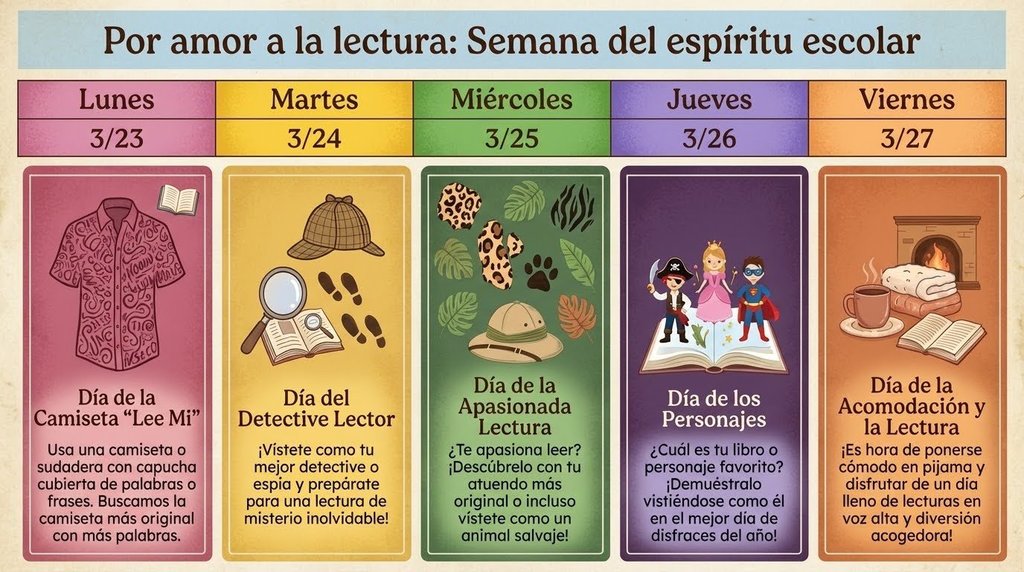
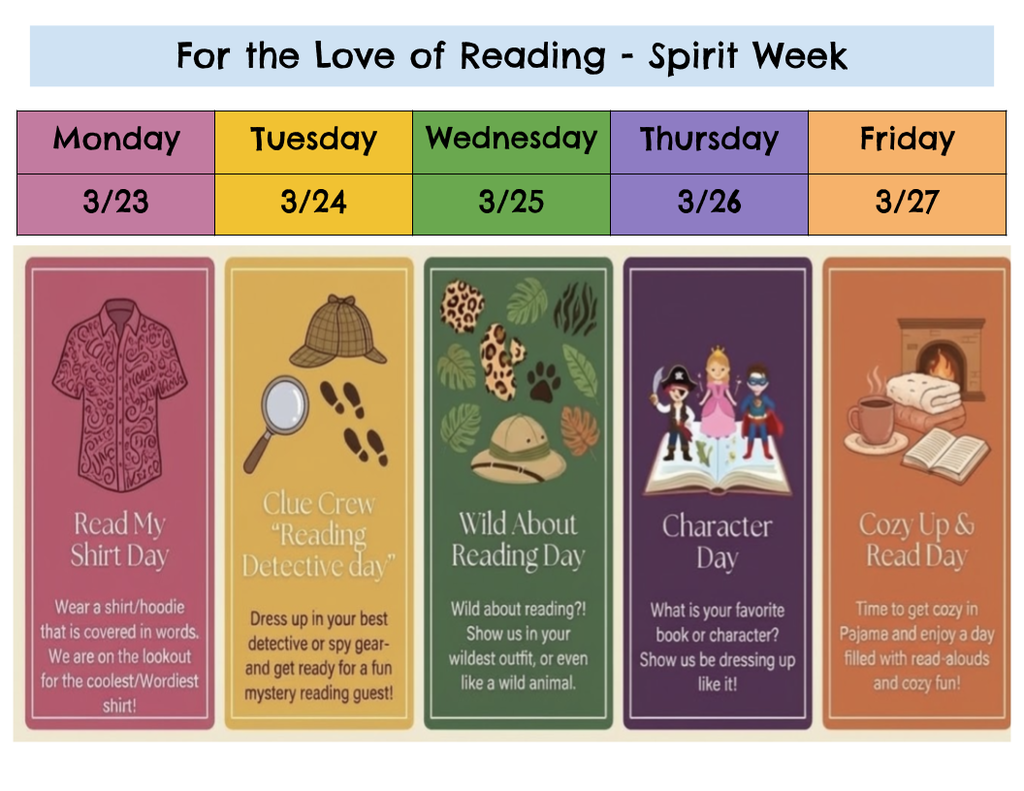
MONDAY Read My Shirt Day: Wear something covered in words. We are on the lookout for the coolest, wordiest shirt 👀
TUESDAY Clue Crew Detective Day: Dress up in detective or spy gear as we welcome a mystery ready guest! 🔍
WEDNESDAY Wild About Reading Day: Prove your wild pride for reading by dressing like a wild animal 🦁🐸🐘🐒🦋
THURSDAY Character Day: Show up like your favorite character or book 👸🏼👨🏼🚀🏂🧜
FRIDAY Cozy Up & Read Day: Dress for the occasion in pajamas and enjoy a day full of read alouds 🧸

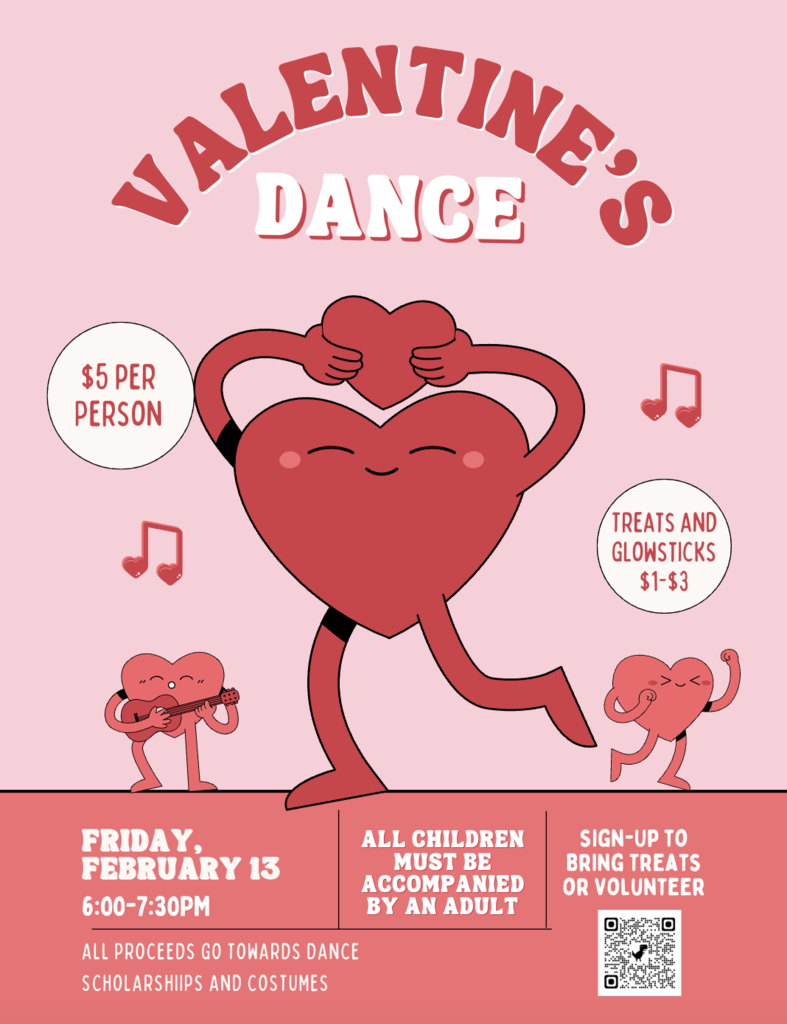
get your dancing shoes ready! ❤️ You’re invited to the Valentine’s Dance! Join us Friday, Feb 13th from 6:00-7:30 PM. Tickets are $5/person. All kids must be with an adult. We’ll have treats & glowsticks ($1-$3) for sale! 🎶 See the flyer for details!
Dear Shoemaker Families,
As we continue to hold the Evergreen High School community in our hearts, I want to share how we will gently and thoughtfully support students during our scheduled lockdown drill on Monday morning around 10:00. Our goal is to help students feel safe and prepared, while keeping the experience calm, brief, and reassuring.
📝 A lockdown drill is a safety practice where students stay quiet and out of sight with their teacher while adults check that the building is secure. It is similar to a fire drill or weather drill, but instead of leaving the classroom, students stay inside and wait quietly until the all-clear is given. There is no emergency during this practice—our goal is simply to help everyone know what to do just in case.
This drill is a state required precautionary safety measure that all schools complete twice each year. Our goal is to help students know what to do in a calm, supportive way—never to scare them.
We know that children’s awareness of events like Evergreen can vary widely. Many students may not know about what happened—and that is completely okay. Others may have heard about it at home or in passing. Our staff are prepared to meet students wherever they are emotionally.
💛 How the Drill Will Look at School
For our youngest students (Preschool and Kindergarten), the drill involves quietly gathering together in their classroom bathroom with their teacher following the district’s “Lock, Lights, Out of Sight” protocol.
For grades 1–5, students will stay quiet and out of sight in and area in their classrooms following the district’s “Lock, Lights, Out of Sight” protocol.
Teachers will guide the drill calmly and briefly. It will be over within just a few minutes.
If a drill ever happens when students are not in their classrooms, they are taught to stay calm, follow the nearest adult’s directions, and move to a safe space; staff are trained to support and guide students wherever they are in the building.
🧠 How and Why We Talk About Lockdown Drills
We are intentionally using research-based, trauma-informed best practices recommended by the National Association of School Psychologists (NASP), the National Child Traumatic Stress Network (NCTSN), and the Colorado School Safety Resource Center (CSSRC).
A trauma-informed approach means we talk about the drill in calm, simple, age-appropriate ways that help children feel safe and prepared—without creating fear or anxiety.
These organizations emphasize that for young children, drills should:
Be presented as predictable safety routines (like fire or weather drills)
Use calm, simple language and avoid graphic or fear-based details
Emphasize that the adults’ job is to keep them safe and their job is to stay calm and quiet
Avoid introducing the idea of violence or weapons to children who are not aware of it
Include quick reassurance and a smooth return to normal routines afterward
This approach helps students build confidence and preparedness without creating unnecessary fear or trauma.
🧠 About Older Students’ Awareness
Older students, especially in 4th and 5th grade, often have a broader awareness of the world around them. Some may have heard about events like the tragedy in Evergreen or seen related news or social media. If your child brings up these topics, it’s helpful to listen, acknowledge their feelings, and remind them that the adults at school are always working to keep them safe. Our staff will also respond in this way—calmly, briefly, and with reassurance—while keeping the focus on safety and support.
💚 If Your Child Seems Worried
If your child shares worries or questions about the drill—or about events they’ve heard about—we are here to help. Please let their teacher or our mental health team (school psychologist or social workers) know so we can support your child at school and communicate with you as needed.
We will move through Monday’s drill quickly and calmly, and our team will continue to prioritize students’ emotional safety as well as their physical safety. Thank you for partnering with us to help our students feel cared for and protected.
With care and partnership,
Christine Fleming
Principal, Joe Shoemaker School